
Asbestos in Lancashire’s Textile Heritage Buildings – HSG Surveys
Asbestos in Lancashire’s Textile Heritage Buildings
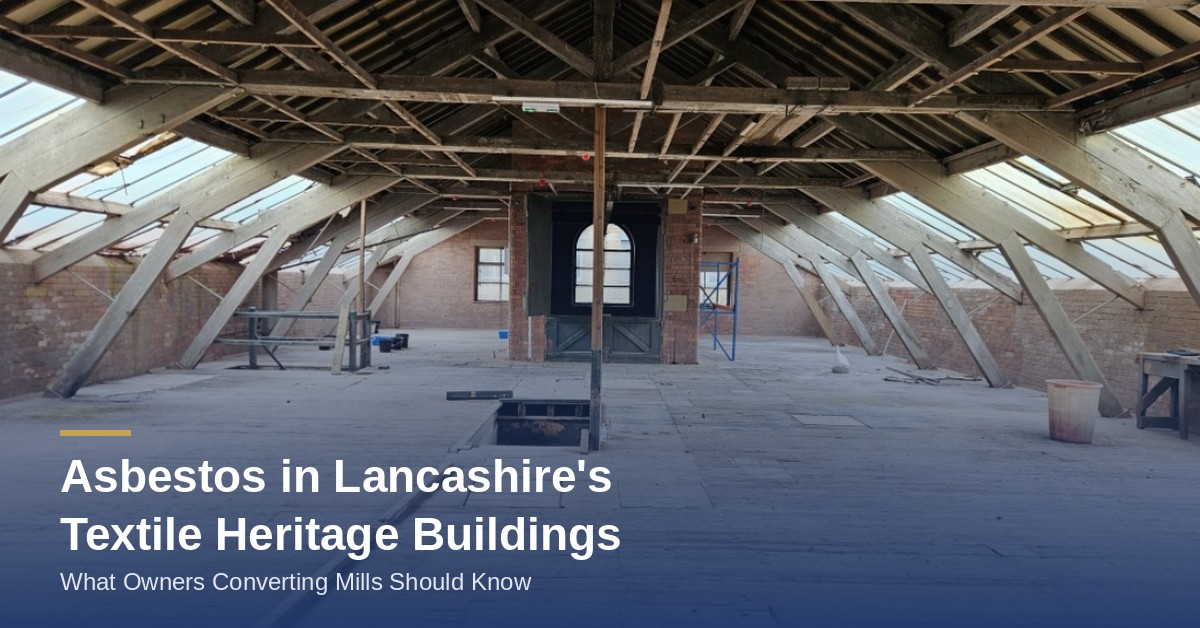
Lancashire’s textile industry left behind an enormous stock of mills, weaving sheds, and warehouse buildings, many now converted into flats, workshops, and business units across towns like Chorley, Preston, and the Nelson & Colne area. If you’re involved with one of these buildings, understanding asbestos in Lancashire’s textile mills is essential before any conversion or renovation work begins.
Why Textile Mills Are a Particular Focus
Lancashire’s cotton and weaving mills were often extended and modified repeatedly through the 20th century as production methods and machinery changed, right through the era when asbestos was in widespread use. Typical locations for asbestos-containing materials in these buildings include:
- Pipe and boiler lagging in old engine houses and plant rooms
- Sprayed fire protection on structural steel beams and columns
- Roofing sheets, particularly on later weaving-shed extensions with their distinctive sawtooth roofs
- Asbestos cement panels used in internal partitioning during later industrial use
- Floor coverings and adhesives from mid-century alterations
Chorley, Preston, and Nelson & Colne: What to Expect Locally
Across this part of Lancashire, textile buildings range from smaller weaving sheds now used as workshop units through to larger multi-storey spinning mills converted into apartments or mixed-use developments. The scale and complexity of the building has a direct bearing on how thorough the survey needs to be, a small single-storey unit is a different job to a large multi-floor mill with decades of alterations layered on top of each other.
Converting a Mill: Where the Survey Fits In
If you’re planning to convert a former textile building, a refurbishment survey before work starts is essential, since conversion work typically involves exactly the kind of intrusive alteration, removing partitions, opening up floors, stripping old services, that a lighter management survey isn’t designed to assess. Getting this right at the planning stage means removal costs and timescales can be built into your project from day one, rather than discovered mid-strip-out.
Already Own a Converted Mill Building?
If you own or manage a mill that’s already been converted, whether as flats, offices, or workshop units, a management survey (if one isn’t already in place, or if the existing paperwork predates your ownership) gives you the ongoing record needed to meet your duty to manage. This is particularly relevant for landlords of converted mill apartments with shared stairwells, corridors, or plant rooms.
Frequently Asked Questions
Are all Lancashire mill buildings assumed to contain asbestos?
Not automatically, but given the age and typical construction and alteration history of these buildings, it’s a sensible working assumption until a survey confirms the actual picture.
Does a mill conversion completed a few years ago still need checking now?
If the original survey and removal work covered the areas being reused, generally not, but any new work, whether an individual unit fit-out or further building-wide alterations, would need its own assessment for that specific area of work.
How does mill size affect survey time and cost?
Larger, more complex buildings with a longer history of alterations naturally take longer to survey thoroughly than a small, single-storey unit. We’ll give you a realistic timeframe once we understand the scale and history of the specific building.
Working on a mill or textile building conversion in Chorley, Preston, or the wider Lancashire area? Get in touch to discuss survey requirements before you start.