
Asbestos and Buy-to-Let: A Landlord’s Compliance Checklist – HSG Surveys
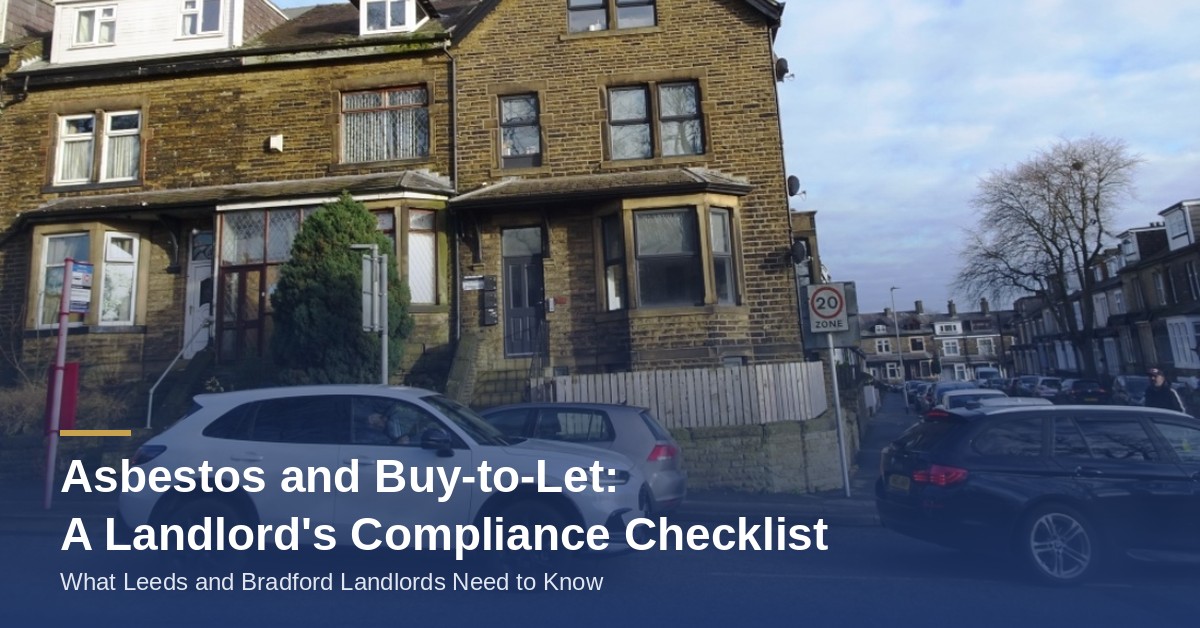
Whether you own one rental property or a growing portfolio, this landlord asbestos compliance checklist covers what actually matters, in the order it usually comes up. Much of the West Yorkshire rental stock in areas like Leeds and Bradford dates from well before 2000, so if that describes your properties, most of this will apply directly to you.
1. Before You Buy
If you’re purchasing a new buy-to-let, a pre-purchase asbestos survey isn’t a legal requirement in the way a homebuyer’s survey might flag structural issues, but it’s a sensible step if the property is older or you’re planning any refurbishment before letting it out. Finding out what’s in the walls, floors, and loft before completion is far cheaper than finding out after you own it.
2. Before Letting the Property
Once you own the property and before it’s occupied, it’s worth knowing:
- Whether any obviously ageing materials (textured ceilings, older flooring, loft insulation, garage roofs) are present
- Whether any refurbishment or redecoration is planned that could disturb those materials
- What condition those materials are in, if already known from a previous survey or seller disclosure
3. If the Property Has Communal Areas
Blocks of flats, HMOs with shared kitchens or bathrooms, and any building with common parts bring the formal “duty to manage” into play. This means you (or your managing agent) need an asbestos register for those communal areas, kept up to date and available to anyone who might need to carry out work there.
4. Before Any Refurbishment or Maintenance Work
This is where most avoidable asbestos exposure incidents happen, tradespeople disturbing materials nobody knew were there. Before any kitchen refit, rewiring, boiler replacement, or structural work, check your existing survey or register. If you don’t have one, or the property hasn’t been assessed since purchase, get it checked before work starts, not during.
5. Ongoing Management
Asbestos in good, undisturbed condition doesn’t need to be removed, but it does need monitoring. A yearly check-in, especially after any building work or change of tenant, keeps your register current and shows you’re taking the duty seriously if it’s ever questioned.
6. Selling or Ending a Tenancy
If you sell the property, an up-to-date asbestos register is a genuinely useful document to hand over, and buyers increasingly ask for one. It demonstrates the property has been properly managed and can smooth the conveyancing process.
Common Areas Where Landlords Get Caught Out
A few materials come up again and again in landlord enquiries across Leeds and Bradford’s older rental stock: Artex ceilings, garage roof sheeting, airing cupboard panels around immersion tanks, and flooring tiles under carpets in properties from the 1960s and 1970s. None of these are automatically a problem, but none should be assumed safe either, without a proper check.
Frequently Asked Questions
Do I need an asbestos survey for every rental property I own?
Not necessarily a full formal survey for every single let, but you should have a reasonable understanding of what’s in each property, particularly before any work is carried out. Communal-area buildings do require a formal register under the duty to manage.
What happens if a tenant reports damaged Artex or flooring?
Treat it seriously and avoid further disturbance until it’s checked. If asbestos surveys haven’t been carried out on the property before, this is a sensible trigger point to arrange one.
Can I refuse to let a property with asbestos present?
There’s no requirement to remove asbestos before letting a property, provided it’s in good condition and properly managed. Many perfectly lettable properties contain some asbestos-containing materials.
Managing a portfolio across Leeds, Bradford, or the wider West Yorkshire area? Get in touch to talk through what compliance looks like for your specific properties.