
Asbestos Surveys in Sheffield
Asbestos Surveys in Sheffield
BOHS-Qualified Surveyors | HSG Asbestos Surveys
Free quotes available. Call us: 07703 203930 / 07711 855891
If you need an asbestos survey in Sheffield, you have come to the right place. We are HSG Asbestos Surveys, a BOHS and P402-qualified team of asbestos surveyors covering Sheffield and the surrounding S postcode area as part of our wider Yorkshire and North of England service. We carry out professional management surveys and refurbishment surveys for homeowners, landlords and businesses, and we give you a clear, straightforward report you can actually understand.
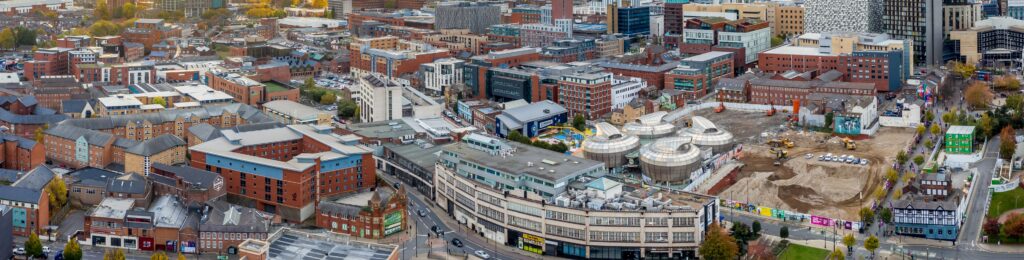
Sheffield has one of the most distinctive and historically significant building stocks of any city in England. The Steel City grew rapidly during the Industrial Revolution as the world’s foremost centre of steel and cutlery production, and the building stock reflects every era of that extraordinary industrial and social history. Victorian and Edwardian terraces in Burngreave, Pitsmoor, Walkley, Hillsborough, Darnall, Attercliffe, Heeley and Sharrow, post-war council estates throughout Gleadless, Manor, Firth Park, Southey, Arbourthorne and the city’s vast suburban belt, former steelworks, industrial premises and older commercial buildings throughout the S1–S14 postcode area all carry a real risk of containing asbestos. Sheffield also has a very significant student population, a large HMO sector in the inner suburbs, and a major ongoing programme of commercial and residential conversion across the Lower Don Valley. Asbestos-containing materials were used extensively in buildings constructed right up until the end of 1999.
The good news is that asbestos is not dangerous if it is left undisturbed and in good condition. But if you are buying, selling, renovating or managing a property in Sheffield, you need to know what you are dealing with, and that is where we come in.
Free quotes available. Call us: 07703 203930 / 07711 855891
What We Do
We carry out professional asbestos surveys across Sheffield and the surrounding S postcode area. Whether you are a homeowner buying an older terraced property in the inner suburbs, a landlord managing student lets or HMOs, a developer working on a Lower Don Valley conversion, or a business planning a commercial refurbishment, we will come out, assess the building properly, and give you a clear report. We are BOHS and P402-qualified and hold P405 in Managing Asbestos in Buildings.
Which Survey Do You Need?
There are two main types of asbestos surveys, and we will always point you in the right direction.
Asbestos Management Surveys
The standard survey for most homeowners and landlords in Sheffield. It identifies asbestos-containing materials in your property, assesses their condition, and tells you what, if anything, needs to be done. If you are a landlord, this also helps you meet your legal duty under the Control of Asbestos Regulations 2012..
Asbestos Refurbishment Surveys
If you are planning any building work, extension, renovation or industrial conversion at your Sheffield property, you will need a refurbishment survey before work starts. It is a legal requirement before any construction or demolition work begins, and applies to a very large proportion of Sheffield’s housing and commercial building stock.
Not sure which you need? Just give us a call, and we will happily help
Asbestos Testing and Sampling
Where there is uncertainty about whether a specific material contains asbestos, we can take samples and have them analysed by an accredited laboratory. This gives you a definitive answer rather than guesswork and is particularly useful when buying or selling a property or when a surveyor or estate agent has flagged a material as potentially containing asbestos.
Free quotes available. Call us: 07703 203930 / 07711 855891
Sheffield Building Stock and Asbestos Risk
Sheffield’s building stock is shaped by two centuries of intense industrial development and reflects a remarkable range of property types and eras, all of which carry a real risk of containing asbestos if built before 2000.
Victorian and Edwardian Inner-City Terraces
The inner-city areas of Burngreave, Pitsmoor, Walkley, Upperthorpe, Netherthorpe, Sharrow, Heeley, Attercliffe, Darnall and Hillsborough contain dense rows of Victorian and Edwardian terraced housing built for the steelworkers, cutlers and factory workforce. These are among the most likely properties to contain Artex coatings, thermoplastic floor tiles, insulation boards and pipe lagging. Many have been through multiple waves of renovation and partially-disturbed materials are common.
Sheffield’s Distinctive Hillside Suburbs
Sheffield has an unusually hilly topography for a large city, and the inner suburbs -including Walkley, Crookes, Nether Edge, Sharrow, Banner Cross, Millhouses and the Abbeydale corridor -contain a mix of Victorian, Edwardian and interwar housing stock of varying character. These areas have been popular with students, young professionals and owner-occupiers, and renovation works are common. Artex coatings, floor tiles and insulation boards are routinely found.
Park Hill and Post-War Council Housing
Sheffield’s vast post-war housing programme produced some of the most ambitious council housing in Britain, including the iconic Park Hill development and the extensive estates of Gleadless, Manor, Southey, Arbourthorne, Firth Park and Parson Cross. Post-war council housing is among the highest-risk property type nationally for asbestos -Artex coatings, thermoplastic floor tiles, insulation boards, ceiling tiles and asbestos cement panels were used extensively throughout these developments.
Former Steelworks and Industrial Premises
Sheffield’s Lower Don Valley -from Tinsley through Attercliffe to the city centre -retains a very significant stock of former steelworks, rolling mills, forge buildings and industrial premises. Former steel and engineering buildings are among the highest-risk property types for asbestos, with structural insulation, pipe lagging, ductwork, ceiling tiles and industrial cladding all commonly containing asbestos-containing materials. The Kelham Island area and other former industrial districts are subject to major ongoing conversion and regeneration.
Student Lets and HMOs
Sheffield has two universities and a very large student population. A significant proportion of the HMO and student-let housing stock is in older Victorian and Edwardian properties in areas like Broomhall, Broomhill, Ecclesall Road, Crookesmoor and Sharrow. HMO landlords have a legal duty to manage asbestos risk in properties built before 2000 under the Control of Asbestos Regulations 2012.
Who We Work with in Manchester
Homeowners
Whether you are buying a Victorian terrace in Walkley or a modern flat conversion in Kelham Island and want peace of mind, or are planning a loft conversion or full renovation on an older Sheffield property, we can help. We give you a clear, honest assessment without overcomplicating it.
Landlords
If you rent out a Sheffield property that was built before 2000, you have a legal duty to manage asbestos risk under the Control of Asbestos Regulations 2012. This applies particularly to the large student-let and HMO sector. We work with landlords across the S postcode area, from single buy-to-let properties to larger portfolios.
Businesses and Developers
Sheffield has a very active development and conversion market, particularly in the Lower Don Valley and former industrial areas. A refurbishment and demolition survey is a legal requirement before any intrusive works begin in any building built before 2000. We have experience surveying a wide range of commercial and industrial property types across Sheffield.
Areas We Cover across Sheffield
We cover Sheffield city and the surrounding S postcode area. If you are unsure whether we cover your specific location, just get in touch and we will confirm.
| Areas and Neighbourhoods | Postcodes |
|---|---|
| Sheffield city centre, Kelham Island, Castlegate, Moorfoot | S1, S3 |
| Walkley, Hillsborough, Malin Bridge, Stannington, Upperthorpe | S6 |
| Sharrow, Nether Edge, Abbeydale, Millhouses, Carter Knowle | S7, S8, S11 |
| Gleadless, Manor, Arbourthorne, Heeley, Meersbrook, Woodseats | S2, S8, S12 |
| Firth Park, Southey, Parson Cross, Burngreave, Pitsmoor | S4, S5 |
| Chapeltown, Ecclesfield, High Green, Stocksbridge, Penistone | S35, S36 |
Not sure if we cover your area? Get in touch, and we will be happy to help.
Common Questions About Asbestos Surveys in Sheffield
| I am a Sheffield student-let landlord. Do I have a legal duty regarding asbestos? |
|---|
| Yes. HMO landlords and duty holders responsible for properties with common areas built before 2000 have a legal duty to manage asbestos risk under the Control of Asbestos Regulations 2012. Sheffield has two universities and a very large HMO sector in older Victorian and Edwardian properties in Broomhall, Broomhill, Sharrow and Ecclesall Road where asbestos-containing materials are commonly present. |
| We are converting a former steelworks building in the Lower Don Valley. What survey is required? |
| A full refurbishment and demolition survey is a legal requirement before any intrusive works begin. Former steel and engineering buildings are among the highest-risk property types for asbestos in the country — structural insulation, pipe lagging, ductwork, ceiling tiles and industrial cladding all commonly contain asbestos-containing materials. Commission the survey well before works are programmed. |
| Do Park Hill and other post-war Sheffield estates contain asbestos? |
| Yes. Post-war council housing is among the highest-risk property type nationally for asbestos. Sheffield’s extensive post-war housing programme — including Park Hill, Hyde Park, Gleadless, Manor, Southey and many others — used asbestos-containing materials extensively throughout. Artex coatings, thermoplastic floor tiles, insulation boards, ceiling tiles and asbestos cement panels are all commonly found. |
| What if asbestos is found in my Sheffield property? |
| Finding asbestos does not automatically mean it has to be removed. If it is in good condition and unlikely to be disturbed, it can often be safely managed in place. Our report tells you exactly what was found, where it is, its condition, and what to do next. |
What Happens Next?
Give us a call or fill in the contact form below. Tell us a bit about your property and what you are looking to do, and we will come back to you quickly with a no-obligation quote. Most surveys can be booked within a few days, and you will have your report shortly after.
Free quotes available. Call us: 07703 203930 / 07711 855891
No hidden costs. Just a clear survey, a clear report, and straightforward advice on what to do next.